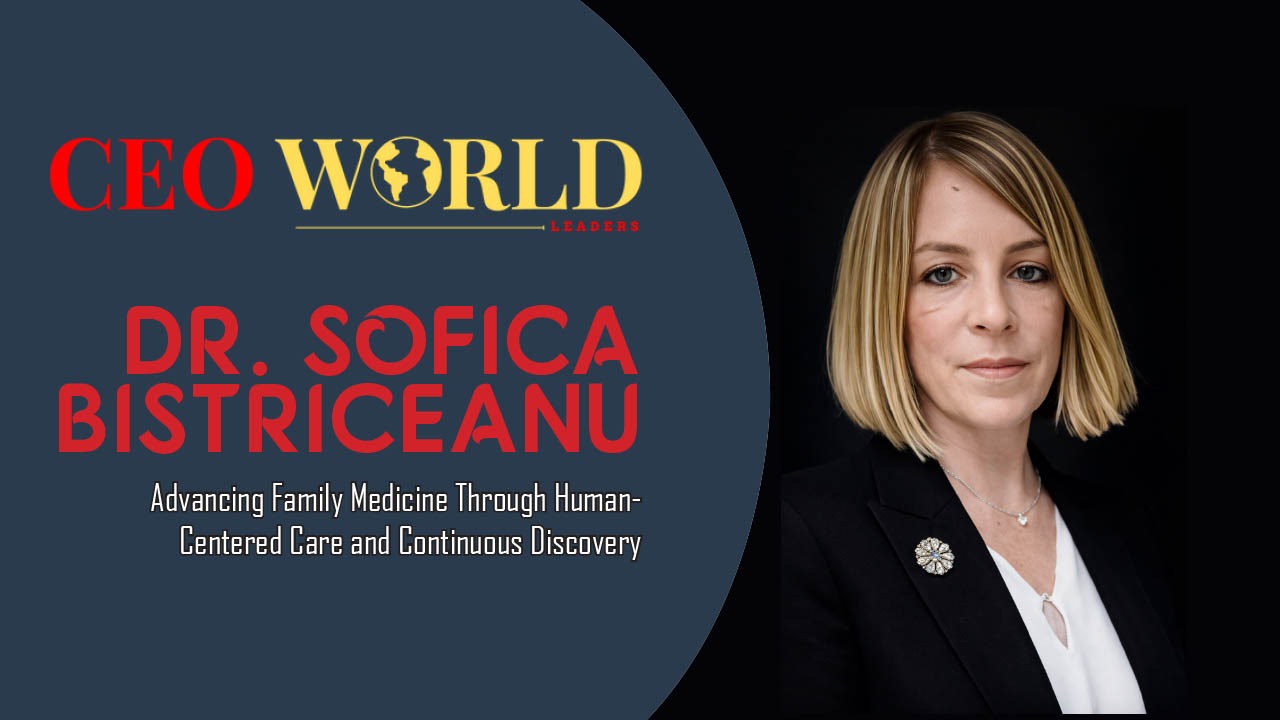
In the evolving landscape of modern healthcare, where technology, specialization, and data-driven systems increasingly shape clinical practice, some physicians continue to anchor medicine in its most fundamental principle: understanding the human being in full context. Among them is Dr. Sofica Bistriceanu, Representative of the Academic Medical Unit – CMI Dr. Bistriceanu, S., founded in 2013. Her work in family medicine reflects a lifelong inquiry into human health, behavior, environment, and the complex interplay between them.
Her professional journey is defined not only by clinical practice but also by academic research and philosophical reflection on human functioning. For Dr. Bistriceanu, medicine is not limited to diagnosing and treating illness; it is a continuous effort to understand the deeper patterns that influence wellbeing across a lifetime.
Dr. Bistriceanu’s path into medicine was shaped by a deep curiosity about human nature and existence. She describes the human being as a “complex and beautifully constructed universe,” characterized by diversity and balance. This perspective became the foundation of her medical vocation.
Her choice of family medicine was intentional. Unlike other specialties, family medicine offers continuity of care from birth through aging allowing physicians to witness the full spectrum of human development. For Dr. Bistriceanu, this continuity provides a unique opportunity to observe how individuals evolve physically, emotionally, and socially over time.
Her academic research, including her doctoral studies, further expanded this perspective. She began exploring how environmental factors, behavioral patterns, and external influences contribute to disease onset and progression. This broader analytical lens has shaped her contributions to international medical discussions, particularly in understanding chronic diseases and systemic health imbalances.
She emphasizes that learning in medicine is continuous, and that every patient interaction contributes to a growing body of knowledge about human health and functioning.
Managing clinical responsibilities alongside research and academic work requires structure, discipline, and adaptability. Dr. Bistriceanu describes balance as an essential principle in both professional and personal life.
She highlights the role of modern technology and digital tools in supporting medical practice. Telemedicine, virtual communication, and AI-assisted systems have enabled more flexible care delivery models, including hybrid approaches that combine in-person consultations with remote follow-ups and home-based care.
Beyond clinical work, she emphasizes the importance of mental restoration and personal wellbeing. Activities such as walking in nature, engaging in cultural experiences, listening to music, and meaningful conversations with loved ones contribute to emotional balance and resilience.
In her view, avoiding burnout is essential for maintaining excellence in healthcare. Technology, when used effectively, can reduce administrative burden and allow physicians to focus more deeply on patient care and decision-making.
The foundation of the Academic Medical Unit – CMI Dr. Bistriceanu, S. reflects a significant shift in how healthcare services can be delivered. In 2008, Dr. Bistriceanu transitioned toward independent practice, introducing a model of home-based medical care, particularly for elderly patients, individuals with mobility limitations, and children with acute conditions.
This model allows physicians to observe patients within their natural environment, offering insights that are often not visible in clinical settings. Factors such as family communication, living conditions, social dynamics, and daily routines become part of the diagnostic understanding.
According to Dr. Bistriceanu, this approach enhances both clinical accuracy and patient comfort. It also enables a more holistic understanding of disease, integrating environmental and behavioral context into medical evaluation.
Equally important, she notes, is the creation of a safe and supportive working environment for healthcare providers, one that allows for more personalized and attentive care.
Dr. Bistriceanu identifies several challenges currently facing family medicine, particularly the decline in the number of practicing family physicians. This trend, she suggests, requires innovative solutions to maintain access to care.
She advocates for a hybrid healthcare model, combining traditional consultations with digital healthcare services such as e-visits, electronic prescriptions, remote monitoring, and virtual follow-ups. This approach not only improves accessibility but also enhances continuity of care.
Preventive healthcare, in her view, is equally critical. She emphasizes the growing role of digital platforms in delivering health education and supporting patients in monitoring key health indicators such as blood pressure, glucose levels, heart rate, and oxygen saturation.
She also highlights the importance of patient participation in managing their own health, encouraging individuals to become active contributors rather than passive recipients of care.
Dr. Bistriceanu’s research contributions span clinical observations and broader theoretical reflections on health and disease. Her doctoral work examined plasma-level cations in the treatment of type 2 diabetes and underscored the need for magnesium supplementation.
Her clinical experience within the home-based care model has provided extensive observational data on disease progression and patient environments.
She also proposes broader reflections on how emotional states, communication patterns, and environmental influences may affect health outcomes. From her perspective, stress, interpersonal conflict, and environmental imbalance can contribute to physiological changes that influence chronic conditions such as arterial hypertension, diabetes, and cardiovascular disease.
She further emphasizes that patient outcomes are not only determined by medical treatment but also by communication quality, emotional environment, and social interaction.
While these perspectives extend beyond conventional frameworks, they reflect her ongoing effort to explore the interconnected nature of human health.
The home-based medical model, according to Dr. Bistriceanu, offers significant advantages for both patients and physicians. Patients benefit from reduced travel burden, shorter waiting times, and care delivered in a familiar environment.
For physicians, it allows deeper insight into patient conditions and more time to assess underlying causes of illness. This can lead to more personalized treatment strategies and improved long-term outcomes.
She also emphasizes that trust, communication, and patient engagement play key roles in treatment success. A strong therapeutic relationship, in her view, contributes significantly to recovery and patient satisfaction.
Dr. Bistriceanu views innovation as essential to improving quality of life and extending life expectancy. She believes that future healthcare systems will increasingly empower individuals to take responsibility for their health through digital tools, remote monitoring, and continuous education.
Hybrid care models are expected to become more prominent, integrating traditional medicine with digital health platforms. This evolution will allow patients to receive timely support while maintaining independence and engagement in their health journey.
She also highlights the importance of lifelong learning for healthcare professionals, supported by participation in scientific conferences, academic platforms, and collaborative research networks.
Preventive medicine remains central to Dr. Bistriceanu’s philosophy. She emphasizes the importance of lifestyle choices, communication quality, and emotional wellbeing in preventing chronic diseases.
She believes that many health conditions, including cardiovascular disease, metabolic disorders, and mental health challenges, can be influenced by behavioral and environmental factors.
In her view, healthier communities are built not only through medical intervention but also through education, awareness, and supportive social environments. Prevention, therefore, is both a medical and societal responsibility.
To young physicians and researchers, Dr. Bistriceanu offers a message grounded in dedication and compassion. Medicine, she emphasizes, is a lifelong journey requiring curiosity, discipline, and empathy.
She encourages future professionals to remain open to learning, to engage deeply with both scientific literature and clinical experience, and to approach patients with generosity and respect.
Simple expressions of gratitude, she notes, often hold profound value in medical practice and human connection.
Dr. Bistriceanu’s future vision for the Academic Medical Unit involves deeper exploration of human communication, including both verbal and non-verbal interactions, and their influence on health and life outcomes.
She is particularly interested in how communication patterns shape relationships, behavior, and long-term wellbeing. She also emphasizes the importance of understanding cultural differences in human functioning and their impact on healthcare.
Her broader perspective views human systems as interconnected, where physical, emotional, and social dimensions continuously interact. Healing, in this context, requires attention to the whole person rather than isolated symptoms.
When reflecting on her legacy, Dr. Bistriceanu emphasizes the importance of communication and interpersonal dynamics in shaping human health. She believes that inappropriate communication can contribute to emotional distress and long-term relational and physiological imbalance.
At the core of her philosophy is the belief that healing is fundamentally connected to compassion, understanding, and meaningful human connection.
Dr. Sofica Bistriceanu’s work represents a distinctive voice in contemporary family medicine, one that blends clinical practice, academic inquiry, and philosophical reflection. Through her leadership at the Academic Medical Unit – CMI Dr. Bistriceanu, S., she continues to explore new dimensions of healthcare that extend beyond traditional boundaries.
Her approach reflects an ongoing commitment to understanding the complexity of human life, where medicine is not only a science of treatment but also an evolving exploration of human experience, environment, and connection.
In a rapidly changing medical world, her perspective stands as a reminder that at the heart of healthcare remains a simple but profound truth: medicine is, above all, about people.